Can I Use a Mortgage to Pay CRA Tax Debt in Canada? (A Real Example of a Private Refinance)
Written by Mark Herman, MBA – Mortgage Broker with 22 Years of Experience specializing in new home buyers and tough deals.
Many Calgary and Canadian homeowners are surprised to learn that the CRA can place a lien on their home for unpaid taxes. Once that happens, refinancing becomes much harder.
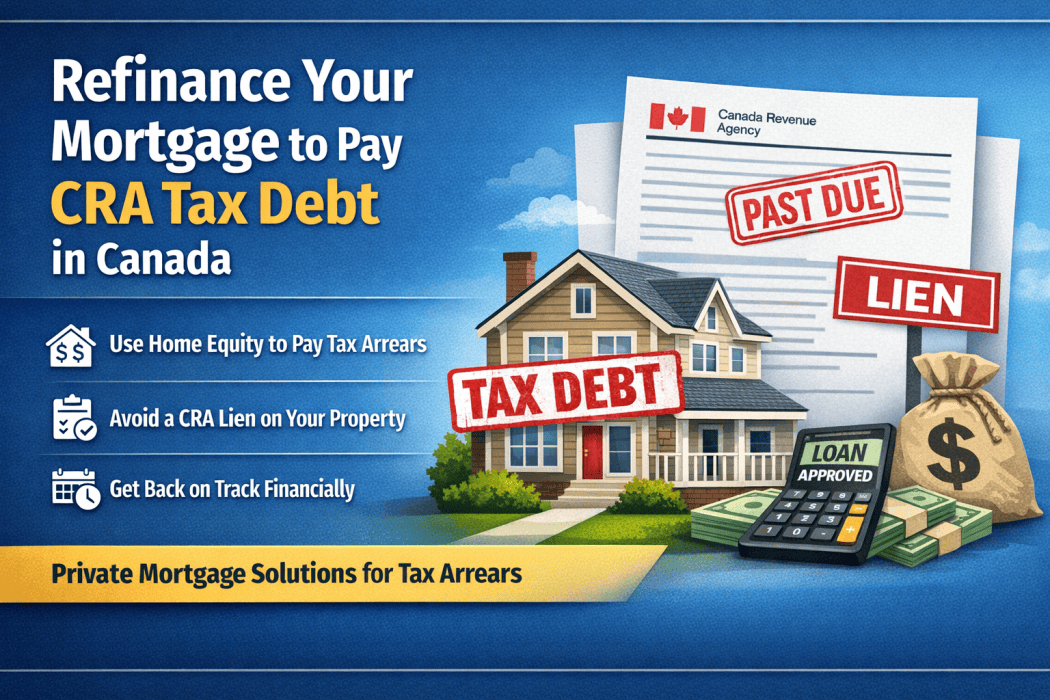
The good news is that homeowners with equity often still have options. In many cases, a private mortgage refinance can be used to pay CRA tax debt, remove the lien risk, and give you time to get your finances back on track.
Below is a real example of how this works.
Real Example: Refinancing to Pay $29,000 in CRA Tax Debt
A self-employed homeowner recently contacted me about refinancing their mortgage to deal with back taxes owed to the Canada Revenue Agency (CRA).
Here was the situation:
Business tax situation
-
Business filings completed up to Oct 2022 – Sept 2023
-
Currently working with an accountant to file Oct 2023 – Sept 2024
-
Next filing period 2024–2025 still pending
-
GST paid up to end of 2024
-
GST may still be owing but amount unknown until filings are complete
Income structure
-
Owner pays themselves from the business when income comes in
-
No dividends issued
-
Most tax liability flows to personal taxes
Personal tax situation
-
Approximately $29,000 in personal tax debt to CRA
CRA had indicated they may place a lien on the property, which would make financing much more difficult.
The homeowner didn’t currently have the cash to pay the taxes, and they were also trying to pay their accountant to complete outstanding business filings.
Why CRA Debt Is a Problem for Mortgage Lenders
Most traditional lenders (banks and credit unions) require that CRA debt be fully paid before they approve a mortgage refinance.
They want to ensure:
-
There is no CRA lien registered
-
All tax filings are up to date
-
There are no outstanding collection issues
If these conditions are not met, the bank will usually decline the mortgage.
How a Private Mortgage Can Solve the Problem
In situations like this, a private lender refinance can be used to:
-
Pay off the CRA tax debt
-
Prevent or remove a CRA lien
-
Provide time to complete tax filings
-
Stabilize finances before returning to a traditional lender
Private lenders focus primarily on:
-
Equity in the property
-
Property value
-
Exit strategy (how the loan will be repaid or refinanced later)
They are often much more flexible when dealing with self-employed borrowers or tax arrears.
Typical Structure of a CRA Tax Debt Refinance
A refinance for tax debt usually works like this:
Step 1 – Property appraisal
The lender confirms the home’s value and available equity.
Step 2 – Mortgage approval
A private lender approves a mortgage based on the equity position.
Step 3 – CRA payout
Funds from the refinance are used to pay CRA directly.
Step 4 – Short-term mortgage
The homeowner keeps the private mortgage for 12–24 months while fixing their tax situation.
Why Acting Before a CRA Lien Matters
Timing is critical.
If CRA registers a tax lien on your property, refinancing becomes significantly more complicated because:
-
The lien must be paid during the refinance
-
Some lenders refuse to fund if the lien is already registered
-
Legal costs can increase
Getting financing before the lien is registered gives homeowners far more options.
Who This Strategy Works Best For
Using a private mortgage to pay CRA debt can work well if you:
-
Own a home with significant equity
-
Are self-employed
-
Have unfiled taxes that are being completed
-
Need time to catch up financially
This strategy is common for:
-
Business owners
-
Contractors
-
Real estate investors
-
Commission-based professionals
The Exit Plan: Moving Back to a Traditional Mortgage
Private mortgages are usually short-term solutions.
During the term, the goal is to:
-
Complete all tax filings
-
Pay CRA balances
-
Improve income documentation
-
Refinance into a lower-rate bank mortgage
Featured Snippet – Q&A Section
Frequently Asked Questions About CRA Tax Debt and Mortgages
Can you refinance your home to pay CRA tax debt in Canada?
Yes. Homeowners with sufficient equity can often refinance their mortgage to pay CRA tax debt. If traditional lenders will not approve the refinance, a private mortgage lender may still provide financing based on the home’s equity.
Can CRA put a lien on your house for unpaid taxes?
Yes. The Canada Revenue Agency can register a tax lien against your property if taxes remain unpaid. Once registered, the lien attaches to your home and must usually be paid before selling or refinancing.
How much equity do I need to refinance to pay tax debt?
Most private lenders will allow refinancing up to approximately 75–80% of the home’s value, depending on the situation and property location.
Will banks refinance if I owe CRA money?
Most banks require that CRA debts be paid first and tax filings be up to date. If taxes are still outstanding, homeowners often need to use a short-term private mortgage to pay CRA and then refinance with a bank later.
Mortgage Example Calculator Section
Example: Using a Mortgage Refinance to Pay CRA Tax Debt
Let’s look at a simplified example.
Home Value: $700,000
Current Mortgage: $420,000
Maximum Refinance at 80%: $560,000
Potential equity available:
$560,000 – $420,000 = $140,000 available
If the homeowner owes $29,000 in CRA taxes, they could refinance and:
-
Pay the CRA debt in full
-
Cover legal and appraisal costs
-
Possibly consolidate other high-interest debts
This type of refinance is commonly used as a temporary strategy, allowing the homeowner to clean up their tax situation before moving back to a traditional lender.
Frequently Asked Questions
Can CRA force the sale of my home?
Yes, in extreme cases CRA can pursue legal action that could eventually lead to the forced sale of property.
However, most homeowners resolve the issue by paying the tax debt through refinancing.
Can I get a mortgage if my taxes aren’t filed?
Traditional lenders usually require all tax filings to be current.
Private lenders may still consider the mortgage if:
-
You are actively working with an accountant
-
The property has enough equity.
How much equity do I need to refinance CRA debt?
Most private lenders require the mortgage to stay below about 75–80% of the home’s value, although this varies.
Final Thoughts
Tax debt with CRA is stressful, especially for self-employed homeowners. But if you own property with equity, a private mortgage refinance can provide a solution to clear the debt and buy time to get your finances organized.
The key is acting early — before CRA registers a lien on your home.
Author Bio
Mark Herman, MBA is a mortgage broker with 22 years of experience helping homeowners across Canada solve complex financing situations, including tax debt, private mortgages, and self-employed income challenges.