
OnlyFans Mortgage in Canada: How Content Creators Can Get Approved (A-Lender vs B-Lender Options)

OnlyFans Mortgage in Canada: How Content Creators Can Get Approved (Even Without a “Traditional” Job)

If you earn income through OnlyFans, YouTube, TikTok, Twitch, Instagram, or any other online platform, you’ve probably wondered:

Can I actually qualify for a mortgage in Canada with this kind of income?

Yes — absolutely.

I’m a mortgage broker in Calgary Alberta with 22 years experience and an MBA in Finance. I’ve helped multiple clients in the creator economy (including 3 mortgages for OnlyFans / influencer clients) get the mortgage approvals they were looking for.

Here’s the key:

OnlyFans income is treated as self-employed income, which means you’ll need to prove it differently than someone with a standard T4 job.

The good news? There are two clear paths to getting approved — and once you understand them, the process becomes much easier.


The Two Ways to Get a Mortgage With OnlyFans Income in Canada

When it comes to qualifying for a mortgage using OnlyFans income, there are really two main routes:

  1. A-Lender (Prime / Bank mortgage approval using tax documents)

  2. B-Lender / Alternative lender approval using bank statements

Let’s break them down.


Option 1: A-Lender Mortgage (Prime Bank Approval)

This is the best option if you qualify.

Why? Because A-lenders (major banks and prime lenders) offer:

  • the lowest interest rates

  • the best mortgage terms

  • more flexible long-term options

  • fewer fees

How A-Lenders Qualify OnlyFans Income

Most A-lenders will treat OnlyFans income as self-employed income and will base your qualifying income on a 2-year average.

In most cases, lenders will look directly at:

Line 15000 (Total Income) on your tax return

This is important because Line 15000 includes all income sources, such as:

  • T4 income

  • self-employment income

  • dividends

  • other reported income

So if you have a mix of creator income plus other employment or dividends, it can all help you qualify.

Documents Required for A-Lender Approval

This is the standard self-employed mortgage package:

2 years T1 Generals
2 years CRA Notices of Assessment (NOAs)
✅ If incorporated: 2 years accountant-prepared financial statements

That’s the “gold standard” for prime lender approval.

Down Payment for A-Lender Approval

If you qualify through an A-lender, you may be able to buy with as little as:

10% down payment

(depending on purchase price and overall application strength)

So if your taxes are clean and your income is strong, this is often the easiest and most affordable path.


Option 2: B-Lender / Alternative Mortgage (Bank Statement Approval)

This option is extremely common for creators, especially early on.

Why? Because a lot of OnlyFans creators (and influencers in general) can earn strong income — but their tax returns don’t always show it clearly.

Sometimes it’s because:

  • income has only been strong for the last 12 months

  • deductions reduce taxable income significantly

  • income is growing rapidly year over year

  • taxes haven’t “caught up” yet

This is where B-lenders (also called alternative lenders) can be a game-changer.

How B-Lenders Qualify OnlyFans Income

Instead of relying strictly on your tax documents, some B-lenders can approve you based on:

12 months of bank statements

showing consistent deposits and cash flow.

They’re essentially saying:

“If your bank records show stable income, we can work with that.”

Documents Required for B-Lender Approval

Alternative lenders usually require:

12 months of bank statements (sometimes more)
✅ proof of consistent deposits
✅ income verification trail (platform deposits, payout history, etc.)
✅ strong overall financial picture

Down Payment for B-Lender Approval

Here’s the big difference:

You typically need at least 20% down payment

B-lenders take on more risk, so they require a larger down payment and often charge a slightly higher interest rate.

But this option can be incredibly useful if:

  • your income is real and consistent

  • your taxes don’t reflect your full earning power yet

  • you want to buy now instead of waiting two full tax years


Which Option Is Better?

If your OnlyFans income is properly documented and reflected on your tax returns, the A-lender route is almost always the best option.

It’s cheaper, cleaner, and easier long-term.

But if your income is strong and growing quickly — and you want to buy now — the B-lender route can get you into the market sooner.

A lot of creators use a B-lender as a stepping stone, then refinance into an A-lender later once their taxes show a longer history.


What Lenders Are Really Looking For

Regardless of which route you take, lenders want to see three things:

1. Stability

They want to know your income isn’t a one-month spike.

2. Consistency

They want to see a pattern of deposits or income over time.

3. Verifiable Paper Trail

Your income must be provable and documented — not just screenshots.


A Quick Note on Taxes (Yes, They Matter)

OnlyFans income in Canada is treated as business income.

That means you’re required to report it properly, and depending on your earnings, you may also need to register for and collect GST/HST.

Many creators reduce taxable income by claiming expenses (which is completely legitimate), but that can also reduce how much mortgage you qualify for under an A-lender.

That’s why planning ahead matters.


Do You Have to Tell the Bank You’re on OnlyFans?

This is one of the biggest concerns creators have.

Here’s the honest truth:

Lenders care less what you are creating. They care about whether the income is stable and properly documented.

Your mortgage application is about:

  • income

  • credit

  • debt ratios

  • down payment

  • documentation

Not personal judgment – and we don’t judge – as all the models we have done mortgages for make WAY MORE than us!


Tips to Improve Your Chances of Approval

If you’re earning creator income and want to qualify for a mortgage, these steps help a lot:

✅ Keep clean bank records

Separate personal and business banking if possible.

✅ Report your income properly

Your NOAs and tax filings are your best friend with prime lenders.

✅ Don’t wait until the last minute

Mortgage approval is easiest when you plan 6–12 months ahead.

✅ Work with someone who understands self-employed income

This isn’t the kind of mortgage you want to “wing” at a random bank branch.


Final Thoughts: Yes, You Can Buy a Home as a Content Creator

If you’re earning money through OnlyFans or any online platform, you absolutely can qualify for a mortgage in Canada.

The key is understanding the two paths:

A-Lender Approval

  • Uses tax documents (T1s + NOAs)

  • Income based on 2-year average

  • Uses Line 15000 Total Income

  • Can be approved with 10% down

B-Lender / Alternative Approval

  • Uses 12 months bank statements

  • Income verified through deposits

  • Requires at least 20% down

  • Often higher rates, but more flexibility


Want to Know What You’d Qualify For?

If you’re an OnlyFans creator, influencer, YouTuber, or online entrepreneur and you want a clear answer on what you can qualify for, I can walk you through your options privately.

No judgment. No awkward conversations. Just strategy.

If you want, I can also help you build a plan to move from a B-lender mortgage into an A-lender mortgage later, once your tax history supports it.

Send me a message and I’ll break down your numbers.

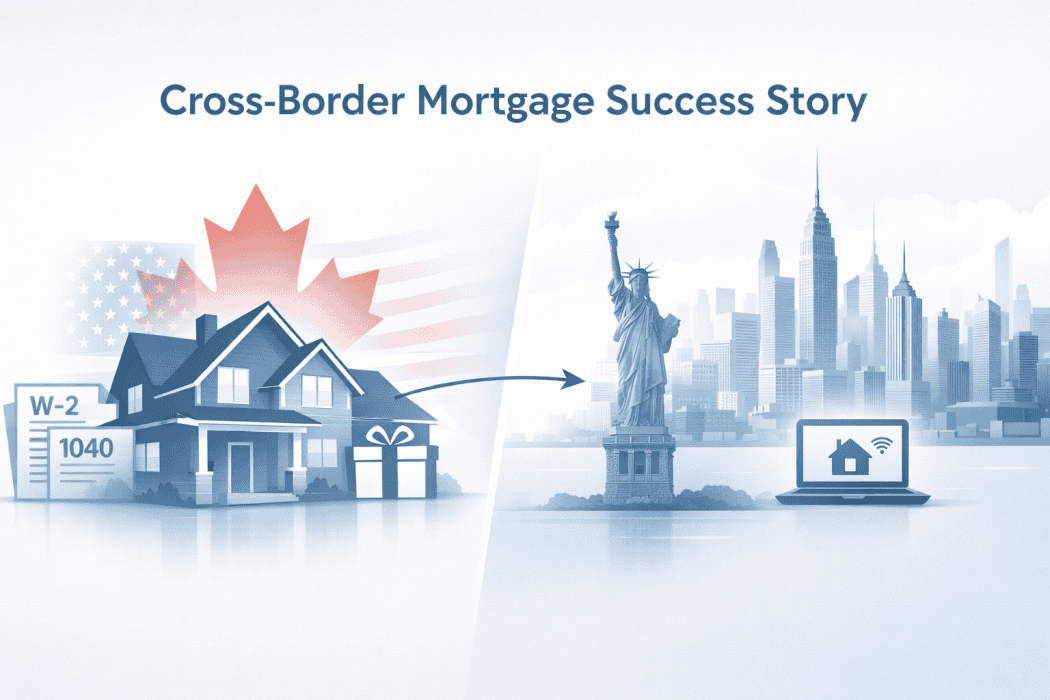
Approved: Mortgage with U.S. Income, Remote Work & Gifted Down Payment (CMHC Deal)

Cross-Border Mortgage Approved: U.S. Income + Gift Funds + CMHC

This Mortgage Deal Looked Impossible (But CMHC Approved It Anyway)

We recently completed a mortgage deal that even I assumed is impossible.

We got it done — and now that we’ve successfully navigated the process, we’re ready to help more buyers in similar situations.

This file was a great example of how the right strategy, documentation, and lender experience can turn a complicated deal into a clean approval.

Mortgage Mark Herman, Best Alberta, Canada mortgage broker for Americans buying in Canada.


The Buyers

This purchase involved two applicants:

  • Buyer #1: Canadian citizen, stay-at-home mom, currently with no income

  • Buyer #2: Permanent resident (PR), employed as a lawyer for a U.S. company, paid in U.S. dollars

Files like this can get tricky quickly, especially when one borrower has no income and the other is employed outside of Canada.


The Property

This was a primary residence purchase.

The buyers also had no other properties, which helped strengthen the application and simplify insurer review.


The Biggest Challenge: U.S. Income + Remote Work

The income-earning borrower worked for an American employer and was able to work 100% remotely.

The key detail? Their employment letter confirmed remote work was permanent, not temporary.

The documentation included:

  • Employment letter confirming permanent remote work status

  • U.S. income documents (W-2 and 1040)

  • A clear written narrative summarizing income and filing history

When borrowers are paid in U.S. dollars, lenders and insurers need to clearly understand consistency, deductions, and income stability. Presentation matters.


Down Payment Structure

The buyers had a 15% down payment, structured as follows:

  • 5% from their own funds

  • 10% gifted from a family member in the United States

Gifted down payments are common, but cross-border gifted funds require extra documentation and clean sourcing. We made sure everything was properly verified and acceptable for insurer guidelines.


CMHC Approval (Including an American Credit Report)

This mortgage was approved through CMHC, and one of the most interesting parts of the deal was that CMHC accepted an American Equifax credit bureau report.

That’s something many buyers don’t realize is even possible — but in the right scenario, it can absolutely work.


Why This Deal Was Unique

This was not a typical mortgage approval.

It required:

  • Cross-border income verification

  • Review of U.S. tax documents

  • Confirmation of permanent remote employment

  • Gifted down payment verification from the U.S.

  • Credit review using an American credit bureau report

  • Proper structuring and presentation for insurer underwriting

But in the end, the deal was approved — and the buyers are now homeowners.


The Takeaway

If you’re a Canadian citizen or PR earning U.S. income, working remotely, or receiving gifted funds from outside Canada, you may still qualify for a mortgage — even if your situation feels complicated.

A bank “no” doesn’t always mean the deal is dead. It often just means it needs the right approach.


Need Help With a Complex Mortgage File?

If you’re buying in Canada but your income, credit, or down payment involves the U.S., I can help you structure it properly from the start.

Mark(at)MaMaRv.ca

Or call/text directly to discuss your options.


Advice on Mortgage Renewals Before April 2026 from an MBA

Questions on what product to pick for your upcoming mortgage renewal.

Here are the reasons that we like the 5 year fixed for Canadian mortgage renewals over the next few months.

(renewals from now, February 2nd until April 1st.)

This data is recent and should be good for the next few months.


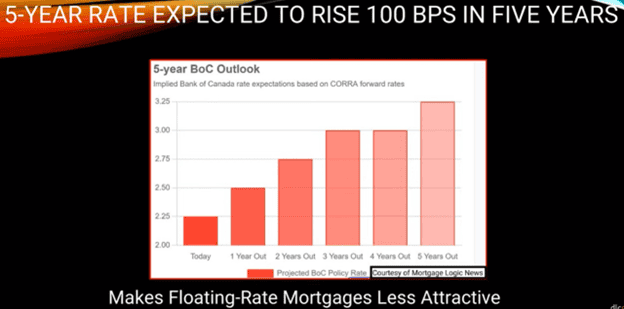
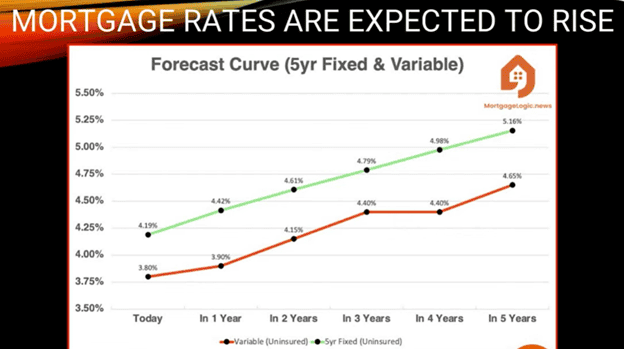
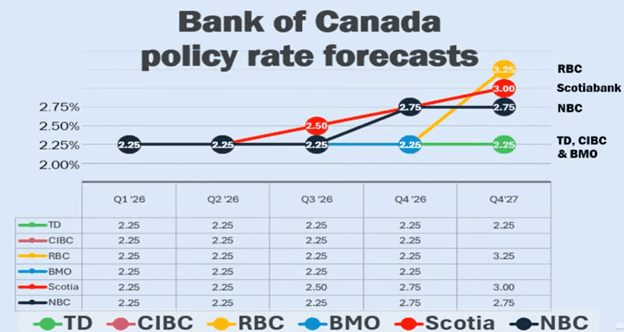
Below are the graphs that show that rates are trending up and are on the increase.

Q: Why are rates trending up?

A: Because Trump policy is generally inflationary, and add in the “cost of uncertainty” due to changing tariffs and other world political issues we have an increasing rate environment.

Big Picture Perspective

I also look at from this perspective, rates were close to 4% BEFORE Covid in 2020, and we are now back to about the same; 3.99% for a 3-year fixed and 4.25% to 4.54% for a 5 year fixed rate term.

  • Comparing these rates, there is not much room for rates to go down; maybe .5%, half a percent.
  • But there is lots of room for them to go up.


What if things get out of hand and rates are at 6% or 7%?

When I started out in 2004, my first customer’s rate was 8.99% and they were happy it did not start with a 9. (You always remember your first deal.)

Summary

The rates for the 3 year fixed and the 5 year fixed are similar so take the 5 year and know you are getting a good rate at the bottom of the rate cycle.

If you take the 3 year and rates DO go up, and you then renew 2 years sooner into what could be 6% or 7% rate environment (when you could have had 2 more years at 4.zz%.) You will be pretty upset as your new monthly payment would now be higher even though your balance is lower.

If you take the 3 year fixed and the rates stay low then you gain a slightly lower payment ($25/ month) over the first 3 years.

Most of our customers agree the safer bet is less expensive when you factor in how sound you will sleep at night.

Mortgage Mark Herman, best Calgary broker for mortgage renewals and advice.